There are moments in a kitchen when everything feels a bit like decoding an ancient script, you know? Like you’re standing there with a recipe book open, flour dust floating in the air, oven humming quietly and suddenly it says 190 degrees Celsius, and your brain just pauses for a sec like “wait, is this gonna burn my cake or save it?”
It’s funny how temperature becomes this invisible language between cultures, chefs, and home cooks. One side of the world speaks Celsius (°C) like it’s second nature, the other leans on Fahrenheit (°F) like an old familiar friend that refuses to leave. And somewhere in between, you’re stuck doing math while the butter is melting too fast.
This whole idea of temperature conversion isn’t just numbers, honestly it’s like translation for heat. A kind of emotional math that decides whether your cookies become soft heaven or crunchy regret.
And today, we’re untangling one very specific question that keeps popping up in kitchens, science labs, and even casual cooking shows:
How Do You Convert 190 Degrees Celsius to Fahrenheit?
Well, let’s walk through it like we’re figuring it out together on a slightly messy kitchen counter.
| Celsius (°C) | Fahrenheit (°F) |
|---|---|
| 0°C | 32°F |
| 100°C | 212°F |
| 180°C | 356°F |
| 190°C | 374°F |
| 200°C | 392°F |
Understanding Temperature Conversion Without Overthinking It
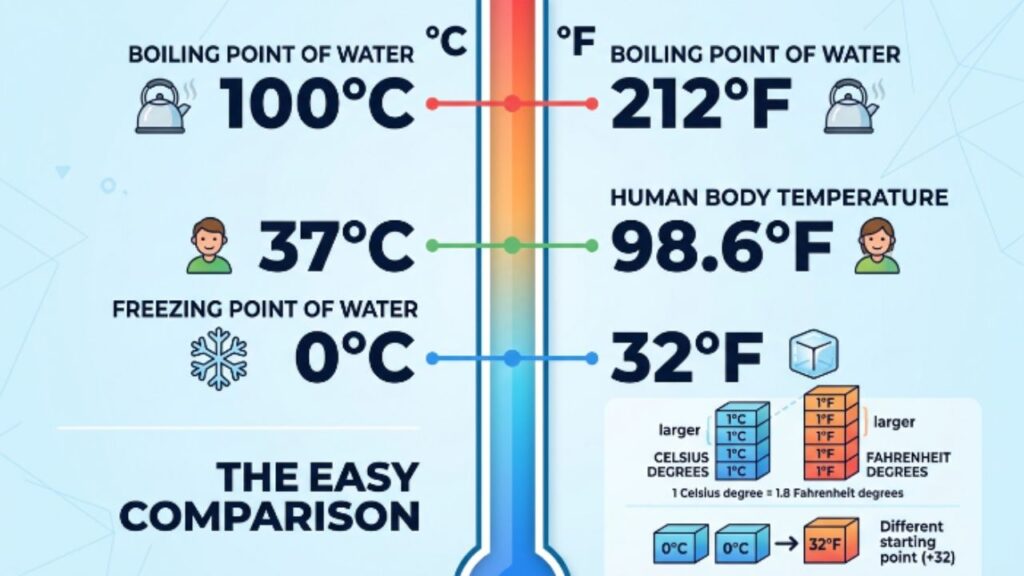
Temperature scales aren’t just random inventions, even if they feel like it at 2 a.m. when you’re baking.
The SI system (International System of Units) uses Celsius as its standard for science, education, and most of the world’s cooking logic. Meanwhile, the US customary system sticks with Fahrenheit, like a tradition that refuses modernization.
Here’s the base idea behind the whole thing:
°F = (°C × 9/5) + 32
That’s the famous temperature conversion formula, the one teachers try to make sound simple but somehow still confuses people the first time.
To make it more relatable:
- 0°C = water freezing point
- 32°F = same freezing point, different language
- 100°C = boiling point of water
- 212°F = boiling point in Fahrenheit terms
So basically, both systems describe the same reality, just wearing different outfits. One feels metric and clean, the other feels slightly old-school but warm in its own way.
In cooking, this becomes super important because oven temperature settings don’t forgive mistakes. A small misread and suddenly your sponge cake becomes a science experiment.
So, What Is 190°C in Fahrenheit Really?
Now let’s get to the heart of it, the actual transformation, the little math dance.
We apply the formula:
°F = (190 × 9/5) + 32
First step, multiply:
190 × 9 = 1710
Then divide:
1710 ÷ 5 = 342
Now add 32:
342 + 32 = 374°F
So the answer is:
👉 190 degrees Celsius = 374 degrees Fahrenheit
And honestly, 374°F sounds kind of intense when you say it out loud, like something that could melt thoughts if you stare at it too long. But in real life, it’s a very common baking temperature conversion used for roasting, cakes, pastries, and all those comforting oven moments.
If you ever forget the exact math, a quick mental trick is to remember that 190°C is “just a bit under 200°C,” which usually lands you around the mid-370s in Fahrenheit. Not perfect science, but cooking often forgives tiny human shortcuts.
This is where mental math conversion techniques become lifesavers, especially when you’re juggling eggs in one hand and panic in the other.
Baking, Cooking, and the Emotional Weight of 374°F
In real kitchens, 190°C to °F conversion isn’t just academic it’s survival for your recipe.
At around 374°F, ovens are sitting in that sweet spot where:
- Cakes rise evenly without collapsing
- Cookies develop that golden edge
- Roasted vegetables get slightly dramatic caramelization
- Chicken skin decides to become crispy and emotional
It’s also a temperature that shows up a lot in recipes from European cookbooks translated into American settings. That’s where confusion starts creeping in.
A chef once casually said (and this is loosely remembered, not perfectly quoted),
“If you mistranslate heat, you don’t just change a dish, you change its personality.”
And that’s kind of true. Baking is basically culinary chemistry, where precision matters more than confidence sometimes.
Even a slight misunderstanding in oven temperature conversion can shift texture, moisture, and taste in ways that feel almost unfair.
Science Behind the Heat: Not Just Kitchen Talk
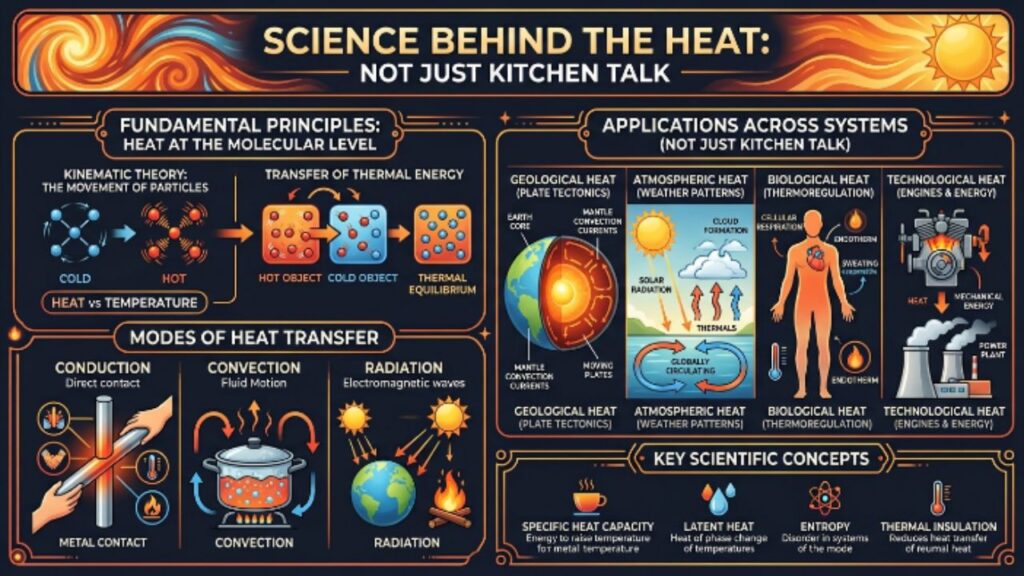
Outside the kitchen, temperature conversion plays a huge role in science too.
In chemistry experiments, getting heat wrong can ruin reactions. In meteorology, weather forecasts depend on accurate reporting between Celsius and Fahrenheit for global understanding. Even in engineering applications, materials behave differently depending on thermal readings.
So when someone converts 190°C to Fahrenheit, they’re actually participating in a global system of measurement interpretation.
Scientists rely heavily on standardized conversions because heat affects:
- Expansion of metals
- Chemical reaction speed
- Atmospheric behavior
- Energy transfer efficiency
In school labs, students often first meet the formula °F = (°C × 9/5) + 32, and half of them forget it immediately, while the other half pretend they didn’t.
That’s okay though. Even experts sometimes double-check using online temperature converters or digital tools just to avoid embarrassing miscalculations.
Learning Tricks, Memory Hacks, and Slightly Weird Shortcuts
Let’s be honest nobody wants to do full formula math every time they cook.
So people develop tricks, like mental shortcuts for how to convert Celsius to Fahrenheit quickly.
One common estimation method:
- Double the Celsius value
- Add 30
So for 190°C:
- Double = 380
- Minus a little adjustment → around 374°F
Not perfect, but surprisingly close.
Some learners also visualize scales like ladders:
- Celsius feels structured, step-like
- Fahrenheit feels stretched, more granular
In classrooms, teachers sometimes use storytelling techniques, while platforms like Flexi Avatar’s Flexi Says Interactive Tool help students interactively explore conversions instead of memorizing them blindly.
And occasionally, educational content writers like Jurg Alex simplify these ideas into everyday language so learners don’t feel intimidated by numbers that look bigger than they are.
Even publishing platforms such as Wittechyo often host guides that break down scientific measurement systems into friendly, readable formats.
Tools, Apps, and the Digital Shortcut Era
We live in a time where nobody has to calculate 190°C manually anymore… but many still do, just for the satisfaction.
Modern interactive conversion tools and mobile apps make things instant. You type “190°C” and boom—374°F appears like magic.
Still, these tools are more than convenience. They help reduce mistakes in:
- Baking temperature accuracy
- Recipe interpretation across regions
- Engineering calculations
- Scientific data entry
Whether it’s a Celsius to Fahrenheit calculator, or a full cooking measurement app, the goal remains the same: remove friction from understanding heat.
And sometimes, people just trust tools more than memory, especially when baking a birthday cake that must not fail.
Why 190°C Keeps Showing Up Everywhere
If you’ve noticed 190°C oven settings appearing repeatedly in recipes, you’re not imagining it.
It’s one of those “standard baking zones” used across:
- Sponge cakes
- Muffins
- Pastries
- Roasted chicken recipes
- Light cookies
This temperature is high enough to activate proper browning but not so high that it burns structure immediately. That balance is why chefs keep returning to it like a favorite setting on an old oven dial.
In cross-cultural cooking, this becomes even more important. A recipe written in Europe might say 190°C, while an American version immediately translates it to 374°F baking temperature, so home cooks don’t accidentally misfire their dish.
That’s where metric vs imperial temperature systems quietly shape global cooking behavior without most people noticing.
A Small Reflection on Heat, Numbers, and Everyday Life

It’s strange when you think about it. Something as invisible as temperature ends up shaping so much of daily life.
From boiling point of water (100°C / 212°F) to freezing moments at 0°C / 32°F, we’re constantly living inside a system of numbers that we rarely question.
And yet, when someone asks, “How do you convert 190°C to Fahrenheit?” it’s really a question about understanding, about translation, about not getting lost in systems that were built long before us.
Even cooking precision becomes a kind of quiet art form, where math meets intuition, and ovens become storytelling machines.
How to Use This in Real Life (Without Stressing Out)
If you’re standing in front of a recipe right now, here’s what actually matters:
- 190°C = 374°F (memorize this one if you bake often)
- Use estimation if you’re in a hurry
- Don’t fear small conversion mistakes—cooking is forgiving more often than science labs
- When unsure, double-check with a quick temperature calculator
And most importantly, trust your senses. Smell, color, texture they often speak louder than numbers.
FAQ: 190 Degrees Celsius to Fahrenheit Conversion
What is 190°C in Fahrenheit?
190 degrees Celsius is equal to 374 degrees Fahrenheit using the standard temperature conversion formula.
How do you convert 190°C to Fahrenheit manually?
You use the formula: °F = (°C × 9/5) + 32.
So, (190 × 9/5) + 32 = 374°F.
Why do Celsius and Fahrenheit give different numbers?
Because they are two different temperature measurement systems. Celsius is based on water’s freezing and boiling points, while Fahrenheit uses a different scale for dividing heat levels.
Is 190°C a common baking temperature?
Yes, 190°C (374°F) is widely used for baking cakes, cookies, pastries, and roasting because it provides balanced heat for even cooking.
Can I use an online converter instead of doing the math?
Yes, you can use an online temperature converter or cooking measurement app for quick results, especially when adjusting international recipes.
Read This Blog:https://meaninges.com/what-does-jfc-mean-in-text/
Final Thoughts: When Numbers Become Everyday Magic
At the end of the day, temperature conversion isn’t just math sitting quietly on paper. It’s part of how humans share knowledge across borders, kitchens, classrooms, and cultures.
190 degrees Celsius to Fahrenheit (374°F) is just one small example of that global translation system working behind the scenes.
So next time you see a recipe calling for it, maybe you’ll remember that you’re not just baking you’re participating in a shared language of heat, science, and a little bit of culinary magic.
And if you ever mess it up slightly? Well, that’s part of the learning too. Ovens forgive more than we expect, and sometimes the best dishes come from almost-right numbers and slightly brave decisions.
If you’ve got your own cooking conversion stories, weird kitchen experiments, or moments where temperature math saved (or ruined) your dish, those are always worth sharing.