You see it pop up in a chat. Maybe from a friend. Maybe in a comment thread that moves too fast to decode properly. SMFH meaning in text suddenly becomes the one thing you can’t ignore because the tone feels… heavy. Not quite anger. Not just disappointment. Something sharper. And you’re sitting there wondering if you missed an inside joke or accidentally stepped into a conversation mid-drama.
Yeah. That confusion is common.
SMFH is one of those slang terms that doesn’t politely explain itself. It hits like a reaction first, meaning second. And once you understand it, you start seeing it everywhere.
What Does SMFH Mean in Text?
SMFH stands for “Shaking My F*ing Head.”
It’s an intensified version of SMH (“Shaking My Head”), but with more emotional weight. More frustration. More disbelief. Sometimes even a bit of anger, depending on context.
It’s not just “I disagree.”
It’s closer to:
- “I can’t believe this.”
- “This is so frustrating.”
- “You’ve got to be kidding me.”
The added profanity isn’t random decoration. It’s doing emotional work. It escalates the reaction from mild disappointment to something more raw.
You’ll usually see SMFH used in quick-response environments:
- text messaging
- TikTok comments
- Discord chats
- Instagram replies
- X (Twitter) reactions
It belongs fully to the world of internet slang meaning systems, where speed matters more than grammar and emotion is compressed into acronyms.
Origin of SMFH and How It Evolved
SMFH didn’t appear out of nowhere. It grew out of a very predictable pattern in digital communication.
First came SMH.
Then people started intensifying it.
That’s how online language evolves. Short forms get stretched, twisted, upgraded. Emotion gets layered on top of emotion.
From SMH to SMFH
SMH is mild. It’s the digital equivalent of a slow head shake.
SMFH is different. It adds pressure. It adds edge.
Think of it like this:
- SMH = disappointed sigh
- SMFH = loud, frustrated reaction you can almost hear
The shift reflects a broader trend in Gen Z internet language and meme culture where emotional expression becomes more exaggerated for effect.
Rise in Social Media Slang Culture
As platforms like TikTok, Snapchat, and Discord exploded in daily use, shorthand communication became necessary. Nobody wants to type full sentences during fast-moving conversations.
So acronyms like SMFH thrived. They became part of a shared emotional code.
Not formal. Not polished. Just fast.
SMFH vs SMH Key Differences
People confuse these two constantly, but the emotional gap is actually significant.
SMH (Shaking My Head)
- Mild frustration or disappointment
- Calm judgment
- Often passive
Example:
- “He forgot his own birthday again SMH”
SMFH (Shaking My F*ing Head)
- Strong frustration or disbelief
- Emotional intensity is higher
- Sometimes carries anger or sarcasm
Example:
- “He crashed the group project deadline again SMFH”
The difference is tone, not just words. SMFH belongs in more heated reactions. SMH can live in casual observation.
Put simply: SMFH hits harder.
When Do People Use SMFH?
This is where things get more interesting. SMFH isn’t random—it shows up in very specific emotional moments.
Frustrating Situations
When something is clearly avoidable but still goes wrong.
- Someone repeats the same mistake
- A plan collapses due to carelessness
- Common sense gets ignored
Online Reactions
On social media, SMFH becomes instant commentary.
You’ll see it under:
- viral fails
- controversial takes
- absurd behavior clips
- meme-worthy mistakes
It’s part of reaction messaging culture, where people respond emotionally rather than analytically.
Gaming and Group Chats
In gaming spaces like Discord, SMFH is almost a reflex.
- teammate makes a bad move
- last-minute loss
- chaotic decision-making
It becomes shorthand for collective frustration.
Is SMFH Offensive or Rude?
This depends heavily on context.
The profanity in SMFH makes it mildly vulgar. That’s unavoidable. But “rude” isn’t a fixed label here.
It can be:
- joking between friends
- expressive venting
- sarcastic commentary
Or it can feel sharp if directed at someone personally.
Context decides everything.
If someone says SMFH about a situation, it’s usually not aimed at you. It’s aimed at the situation itself.
Still, tone matters. Always.
Examples of SMFH in Real Conversations
Let’s make it concrete.
Text Messages
- “He missed the bus again SMFH”
- “They changed the exam date last minute SMFH”
Social Media Comments
- “SMFH people still falling for this scam”
- “SMFH why would they even do that”
Group Chat Energy
- “We planned this for a week and he slept through it SMFH”
Notice something? It’s rarely standalone. It attaches itself to a situation like an emotional tag.
How to Respond When Someone Uses SMFH
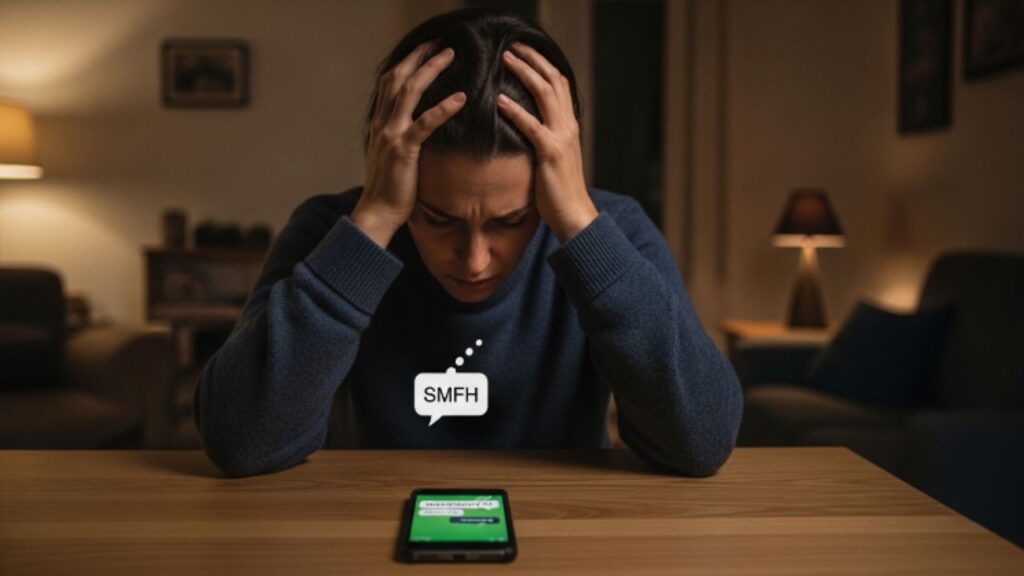
You don’t always need a perfect reply. You just need to match the energy appropriately.
Neutral Responses
Good when you’re not deeply involved:
- “That’s wild”
- “Yeah, that’s rough”
- “Can’t believe that happened”
Supportive Replies
When someone is genuinely frustrated:
- “That sounds annoying”
- “I get why you’re upset”
- “That would frustrate me too”
Humorous Replies
When the vibe is light:
- “SMFH energy unlocked”
- “Not again 😭”
- “This timeline is cursed”
The key is reading the emotional temperature, not just decoding the acronym.
Related Internet Slang You Should Know
SMFH doesn’t exist in isolation. It sits in a whole ecosystem of texting abbreviations and expressive shorthand.
- SMH – Shaking My Head (mild disappointment)
- SMDH – Shaking My Damn Head (stronger version of SMH)
- FML – Frustration or regret expression
- IDC – I don’t care
- OMG – Surprise or shock
These all function as emotional compression tools. Fast typing. Fast reaction. Minimal structure.
Why SMFH Became Popular in Digital Culture
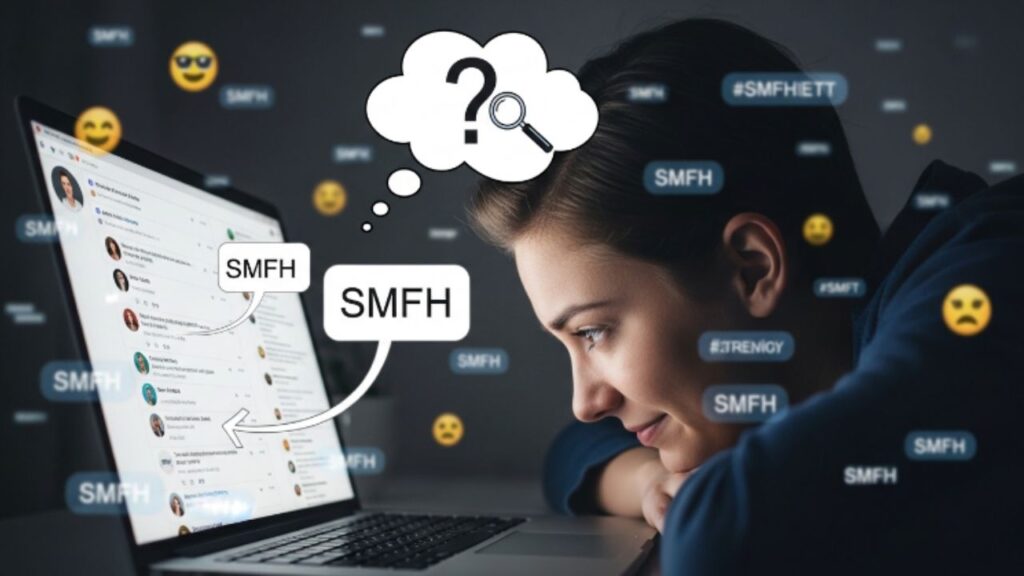
There’s a reason SMFH stuck around while other slang faded.
Speed of Communication
People don’t type full emotional explanations in fast chats. SMFH delivers instant meaning.
Emotional Shorthand
It condenses frustration into four letters. That’s efficient communication.
Meme Culture Influence
Memes thrive on exaggerated reactions. SMFH fits perfectly into that environment. It’s expressive, slightly chaotic, and instantly recognizable.
In many ways, it reflects how online conversations have evolved:
less explanation, more reaction.
FAQs About SMFH Meaning
What does SMFH mean in text messages?
It means “Shaking My F*ing Head” and expresses strong frustration, disbelief, or disappointment.
Is SMFH rude or offensive?
It can be mildly offensive due to profanity, but it’s commonly used informally among friends or online communities.
What is the difference between SMH and SMFH?
SMFH is stronger and more emotionally intense than SMH, often showing deeper frustration.
When do people use SMFH in texting?
It’s used when reacting to frustrating, ridiculous, or disappointing situations.
How should I respond when someone says SMFH?
Match the tone be supportive, neutral, or humorous depending on context.
Is SMFH still commonly used in 2026?
Yes, it remains active in social media slang, especially on platforms like TikTok, Discord, and X.
What does smfh mean in text
SMFH means “Shaking My F*ing Head.” It shows strong frustration, disbelief, or disappointment about something.
smfh meaning
SMFH is an internet slang expression used when someone is annoyed or shocked by a situation. It’s a stronger version of SMH.
smfh meaning in text
In texting, SMFH is used to quickly react to something frustrating, ridiculous, or hard to believe without writing a full sentence.
what does smfh mean
It means “Shaking My F*ing Head,” expressing stronger emotion than SMH, often frustration or disbelief.
what does smfh
SMFH is slang for “Shaking My F*ing Head,” used to show irritation or disbelief in casual online chats.
read this blog:https://meaninges.com/hn-meaning-in-text-shocking-cha/
Final Thought
SMFH isn’t just internet slang. It’s a snapshot of how people process emotion in digital spaces—fast, compressed, and unfiltered. It tells you more about the situation than the sentence itself.
Once you understand it, you stop translating it literally.
You start reading the feeling behind it.
And that’s the real language of online conversation.